Wednesday, May 31, 2017

Rule of Law

Nobody asked but ...

To say that the rule of law should apply to police is NOT to say that there should be no police.  But to say that the rule of law does not apply to police IS to say that we shall not have the rule of law.

"Everybody counts, or no one counts."
-- Hieronymous Bosch

-- Kilgore Forelle

Ireland #2

Blarney Castle


The grain is in the wood before the sawyer gets to it.  It doesn't matter how you crosscut or rip or turn it, the grain reveals itself, predictably but in an unique way.  The history of the wood is there to see.  Such is the spirit of the Irishman and the Irishwoman.  The Túatha is part of how the stock will be seen, no matter how it is turned.

Most of the history of these people came from this small island on the lefthand upper end of Europe.  The people go back to the originals.  How they got there is hidden in the fog of the past.  It is only speculation how, but somehow Celtic and Gaelic peoples got this far from Europe.  Their common trait was a language, and the Irish version of the language is spoken in no other quarter.

I am not a folklorist nor an anthropologist.  I am not an expert on how these people arose, but I am an Irishman, by as many as 7/8ths of my great grandparents.  My family tree is scattered with Carigans, RyansAllens, and Fitzpatricks.  I come from Protestant Northern Ulster Irish coalminers as well as from Catholic potato famine refugees from LeinsterMunster, and Connacht.  Although I did not get to set foot on Ireland's sod until my 74th year, I have been all my life part of one of the greatest diaspora in human history.  Curiously, I am also part of one of the few grand derangements that approach it.  That other 1/8th is Acadien from Chaleur Bay on the maritime reach of the St. Lawrence.

But let us return to the Túatha and why it is different.  The Túatha, among other things, are organizational entities, social groupings of people but not ones that subverted the people to the maintainance of some organizational imperative.  Most simply stated, the Túath is a social structure likely based on kinship.  Its primary purpose seemed to be as a dispute resolution structure.  A typical Túatha was limited in size so as not to overtax the structure.  It was often limited by delineation of one or more of kinship, tribe, territory, birth and/or origin.  Each Túath may have had different dispute resolution methods from other Túatha, and the constituents of one Túath were not individually bound to one Túath.  A plaintif could choose any dispute resolution mechanism from whichever Túath he or she chose to join and support.  But it was not unusual to see most Túatha go unchanged for trans-generational time periods.

These arrangements tended to support individual freedom.  Non-binding dispute resolutions, in the form of restitution, were suggested by a Brehon.  Brehon law, the term for Irish native law, was administered in Ireland down to almost the middle of the seventeenth century, among the native Irish until the depth of the English conquest.  Administrative structures tended to remain as small as the structures of the Túatha themselves.

In any event, the people of Ireland were relatively relieved of oppression and suppression until the Viking invasions about 1300 years ago.  Previously, there was not much call for bringing segments of the population to heel.  And the Túatha were unlikely ever used for conquest.  But those days were now gone.  A succession of overlords influenced the veneer of Ireland.  In the 12th century, the Norman invasion brought the most onerous period of foreign administration.  The Irish were ruled for 800 years by interlopers from England.  What does it take for a people to still want their freedom after so long?  Why are the overlords so willing to be pinned down themselves to oppression and suppression for so long?  I believe the answer lies in the grain of the people on both sides of the question.  The pattern was likely ingrained in the Irish by the long influence of the Túatha.  What compelled the British to pursue empire, apparently at all costs, lies beyond the scope of this writing.  The Irish descendents of the Túatha, however, never failed to keep the flame of independence alive for nearly a millennium.  Their history is on the lips of every Irish, and their modern memes still call for re-unification of Northern Ireland with the Republic of Ireland.  A general cry is "32!," calling for the 6 Ulster counties to join the 26 counties of the current national configuration.

Every tour guide, from the brewhouse to the marketplace, bemoans the injustices of the British occupation, while taking a curious pride in the landmarks left behind.

We saw the multi-dimensional labyrinth of history, wherever we went through the South -- DublinWaterfordMidletonYoughalCorkCobh, and Kinsale.  And into the west, we saw it again at BlarneyDunloeKillarny, and Dingle.  As the trip wound down, the complexity of the past, the present, and the future played along the road through Limerick and Adare to Dunboyne (a lovely village on the northwestern edge of the Dublin conurbation).

I have been to many locales, but I don't believe I have been anywhere in which the individual is a stronger part of the common peoples' makeup.  Ireland is the shockwave rider in the global economy now.  Constantly reinventing itself to stay in the forefront.  There is still a bastion of English oppression, however, in the 6 counties of Ulster -- a ransom that was demanded at the time that England released the rest of Ireland to nationhood in 1922 -- giving rise, as I have written above, to the frequent meme, "32!" which symbolizes the joining of the 26 counties of Ireland with the 6 counties of the Ulster Province of Northern Ireland (UK).

This is not a matter of dreams so that all Irish will become one with a collective, but that they all might live in a similar self-sustaining freedom.

Tuesday, May 30, 2017

Propaganda

Nobody asked but ... 


After I first became a Prokofiev listener, as a child upon hearing Peter and the Wolf and the ballet music of Cinderella, as a high schooler upon buying the Ormandy/Philadelphia Symphony No. 5, I would hear on occasion that Prokofiev was a victim of censorship.  At the time, I understood that to mean that the composer only put out music which unambiguously promoted Soviet interests.  I didn't understand how that worked.  I was further mystified by the incredible beauty of Prokofiev's music -- I heard no bombastic, missiles-on-parade, statist drivel.  It was while listening to and watching Harry Warren's and Busby Berkeley's sublime 'Remember My Forgotten Man' that I saw how propaganda works, it is through the mothballing of that which doesn't fit the narrative.

Sergei Prokofiev
Harry Warren

Saturday, May 27, 2017

Words Poorly Used #87 -- Open Borders

"Open borders" is a bit of an oxymoron.  Natural borders, such as rivers and mountains, have natural fords and passes which are more safe to navigate than other locations.  The fords or passes are naturally open, when there is no statist intervention.  States can take control of natural openings and fictional openings.   Then crossers find different natural openings, or create artificial openings.  The openings are quite distinct from a border.  A border impairs or negatively influences passage, an opening enables or positively influences passage.  Let there be natural borders and natural openings, without state interventions, without cultural definitions.

-- Kilgore Forelle

Thursday, May 25, 2017

Words Poorly Used #86 -- Anecdotal

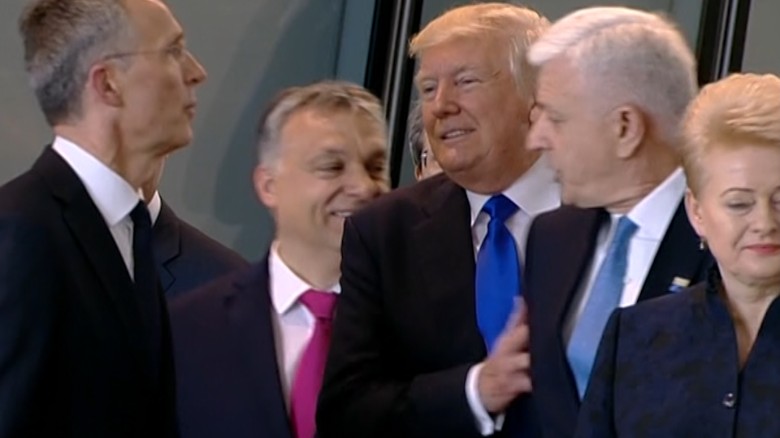
That evidence may be anecdotal is not a case for dismissing the evidence.  Often people will say that an illustration is anecdotal meaning that the example shown does not in itself constitute definitive evidence of the apparent result.  Let's say that an olympic ice skater has an awkward fall in a competition.  That single case neither proves that he is a bad skater nor that he is a good skater who tends to perform poorly in certain cases.  Multiple falls on multiple occasions are a clearer indicator.  A friend today criticized what he called "anecdotal" cherry picking among the media following POTUS through Europe.  But there is another view, the accumulation of gaffes can be taken for perhaps a significant attribute of POTUS.  Anecdotal evidence is valuable in several ways; it gives a qualitative dimension to data, it can accumulate into statistical evidence, and it can give a nod to possible, maybe probable, trends.  After a bit of recurrence, however, dismissing evidence because it is anecdotal is like dismissing an avalanche because it is snow.

 -- Kilgore Forelle


Saturday, May 20, 2017

Bad Behavior

Nobody asked but ...

Voluntaryists often site the condition that minions can get away with murder by wearing a uniform and/or a badge.  I think this cognitive dissonance comes about because of the spade work of higher officials.  The behavior of POTUS and other high muckety mucks is, far too frequently, atrocious.  They do these deeds within the law, skirting the law, on the unstable edge of the law, and outside the law.  No wonder minions think they can place their priorities ahead of common decency.

-- Kilgore Forelle

Photo Bomb

Nobody asked but ...

Why is POTUS in Scotland?  And when will America be great again -- it has been 4 months.  Things are definitely not greater.  And to what former golden era does "again" refer?  On another hand, I'm sure there must be a rule against being that close to a bagpiper.  Nothing good can come of it.  Don't get on an elevator with a bagpiper.  Don't get photo bombed by a bagpiper.  Conversely, if you are a bagpiper, get some pants, and don't get photo bombed by a politician.

-- Kilgore Forelle