Thursday, March 30, 2017

Video

Nobody asked but ...

Videos are mostly shadows on the wall of Plato's Cave.  Yet humans persist in treating them as first hand perceptions in the full sunlight.  I have just left a Web discussion in which a male decided it was OK to hit women based on a man-woman encounter in an Internet video.  That reminds me of the time that Doctor Senator Bill Frist declared Terri Schiavo OK from a news video.  Not OK.  Here's a rule of thumb, do not use videos to  make lifeboat scenaria.

Kilgore Forelle

Tuesday, March 28, 2017

Words Poorly Used #79 -- Waste

A certain POTUS once promised while he was still a candidate that since he didn't need vacations, he was not going to waste taxpayer money on golf and vacations.  This is impending upon the logic fallacy, sometimes known as Special Pleading, aka Moving the Goal Posts.  There is another related fallacy called Moving the Stasis Point.  After POTUS's participating in millions of taxpayer dollars worth of golf outings, I get the feeling that the pivot of the spin is going to revolve around "waste."  A special pleading to redefine the term will be set forth.  Don't you know that golf outings that are not wasted do not figure in this perfect storm of linguistic legerdemain?  It seems that POTUS and his minions believe that if the foursome contains a critical number of peeps with presidential business, then it must be appropriate.  I wonder if Arnold Schwartzenegger was canned on the back nine.  Speaking of Arnold, our POTUS has a track record of pulling the rug from under hapless non-performers.  He decides unilaterally, non-voluntarily to redefine contracts in ways that leave someone else holding the bag, I hear.  Guess who the grand bagholder will be?  Taxpayers who are not cronies, that's who.

 -- Kilgore Forelle

A Voluntaryist Does The Proust Questionnaire

I recently encountered the Proust Questionnaire.  It is a regular feature in Vanity Fair Magazine, where it is answered by a guest celebrity.  The two instances I read were with the late Carrie Fisher (Princess Leia) and Louis CK -- Two very interesting personalities.  I was looking for a framework upon which to build some writing for the Writers' Shared Interest Group (SIG) of which I am a member.

When I got about halfway through I thought, "Voila!  This would be a good architecture for an interview with a very objective voluntaryist.  So I have put myself into the personification of a scholarly, principled, individualist voluntaryist to imagine how honest answers to these questions might look.

Here we go:                         

 1.  What is your idea of perfect happiness?  
I don't know perfect happiness, but from a voluntaryist standpoint, I would imagine that it would be everything voluntary!  While we wait for that perfection, let's make each human interaction voluntary for both parties.  I say both because I believe that 1-to-many or many-to-many interactions are essentially non-voluntary, requiring some degree of coercion.

 2.  What is your greatest fear?
My greatest fear is to be compelled by an authoritarian.  I know of no one who is more qualified to manage my life than me.  That is not driven by arrogance.  I fully accept that I will make errors, and must live with them.  But consider the tragedy that arises when someone, artificially placed over me, makes an error that I will have to live with the rest of my life.  That authoritarian has stolen some of my life.

 3.  What is the trait you most deplore in yourself?
The kneejerk default to intervention is a habit hard to break.  I began to self-identify as a voluntaryist at the beginning of my septuagenerian years.  That is seventy years in which I operated unwittingly through indoctrination.  The habit of intervention is very hard to break.

 4.  What is the trait you most deplore in others?
The kneejerk default to intervention is a habit hard to break.  Everyone spends some portion of their lives prevailed upon by indoctrination.  Each of us, voluntaryists, has a time when we began to think critically about whom is really in control of one's self and one's individual life.  That leaves some period, perhaps years, in which one operates, probably unwittingly, through indoctrination.  The habit of intervention is very hard to break.

 5.  Which living person do you most admire?
I most admire a true voluntaryist.  One who recognizes that there is a non-aggression principle in which one does not initiate aggression or commit violent acts except in defense of that which belongs to the individual voluntaryist.  This is not a license to use force, rather it is a recognition that force can only be used within the four corners of defense of belongings.  What are belongings?  One's self, one's voluntary relationships, one's extended property improved by one's industry.  And force is the last resort, for one has a responsibility for solving problems by reason before force.

Nothing in the self-defense exception grants a right to kill or to steal or to defraud or to bear false witness.  We often hear of the NAP permitting killing in self-defense.  There are no permits.  The ability to grant permissions belongs to no man.  You either intervene or you don't.  The natural obligation in disputes between individuals is to expunge the dispute in the most peaceful, constructive manner possible.  Failing that, or not, each involved individual must shoulder the consequences of her actions.

 6.   What is your greatest extravagance?
There are no extravagances.  These are only figments of the imaginations of interveners.  Do what you will, understanding that all natural laws with consequences have not, and never will be, repealed.

 7.  What is your current state of mind?
My state of mind is free because I understand that freedom comes from within the individual.  The people who are most unfree are the ones who have been indoctrinated to the idea that you must have permission from some authority before you may proceed.

I will quickly grant that you may be constrained in a physical sense.  You are not naturally free to be 100 feet tall.  What one must do is to understand the natural condition of freedom.  Freedom complies with the laws of physics and economics.  One is born free -- without physical attachment to any other.  All attachments, which we will now call relationships, are voluntary.  Babies may be temporarily dependent on the development and experience of their elders -- if abandoned, human babies will usually die.  At some point, earlier than most of us normally think, however, the baby decides to stay or go, physically and/or psychologically, to leave the auspices of their caregivers.

Failure to elect freedom makes two slaves, the one who will not remove oneself from supervision, and the supervisor who will not relinquish supervision.

 8.  What do you consider the most overrated virtue?
Loyalty, in its many forms.  For instance, patriotism is loyalty to the sand inside a closed line drawn in the sand.  Loyalty is usually a virtue demanded by the undeserving of those who are capable of running their own lives and deciding which arbitrary attachments to pursue.  I have no quarrel with those who value loyalty, but I see no gain in attaching oneself to an abstraction.

 9.  On what occasion do you lie?
If I have the luxury of seeing into the future, wherein I know the truth is not critical, I have no qualms about lying to preserve my right to independence.  This is a version of the NAP.  If what you say is in defense of one's natural rights, an appropriate lie is appropriate.  An example would be when your significant other, whom you have associated with voluntarily, asks, "do these jeans make me look fat?" then, discretion is the better part of truthiness.

10.  What do you most dislike about your appearance?
I only have a problem with appearances that are chosen to misrepresent essences.  To be sure, I would like to be my twenty-year-old self again for a number of reasons.  But as long as I meet the approval (sometimes tolerance) of the man in my mirror, I am mostly content with my appearance.  I hasten to admit that I'm not doing any fashion spreads for GQ magazine.  When I was young, I adopted R. Crumb's Mr. Natural as an alter ego, and apart from a dwindling interest in alter egos, I still like the premise.


11.  Which living person do you most despise?
I have no single person in mind for I despise certain behaviors, not individuals.  I despise manipulation including the irreversible crimes against fellow humans that are proscribed in several of the 10 Commandments.  Modern examples of manipulation are warmongering, war profiteering, arrogance, excessive greed, and lying for gain.

12.  What is the quality you most like in a man?
Maybe in Proust's day, there were mostly unavoidable roles by gender, but I do not see non-biological differences among sexes.

13.  What is the quality you most like in a woman?
So, what qualities do I most like in humans?  I like the qualities that attend voluntaryism.  When humans act on those attributes, I like the effect the most among effects.  What are some of the main attributes?  Reasonableness, flexibility, patience, and awareness of self-organizing phenomena.

14.  Which words or phrases do you most overuse?
I overuse freedom, individual, responsibility, judgment, knowledge, and wisdom.  And I intend to go right on overusing them.

15.  What or who is the greatest love of your life?
People, places, things, and events with which I have formed voluntary relationships, usually on a one-to-one basis.  One-to-many, many-to-one, and many-to-many relationships are very difficult for which to maintain choice and responsibility.

16.  When and where were you happiest?
I am always happy when I have choices about what to do next so that I can take responsibility for consequences.  I am also happy when I have made a choice which turns out to be bad to have the ability to atone for the past and to have the knowledge to avoid the consequences in the future.

17.  Which talent would you most like to have?
I would love to have the talent, or the inclination to develop it, of patience.  I once read a court decision in which the justices wrote, "We shall await the event ..."  This has become an important motto for me.  Spontaneous human action, such as in free markets, typically produce event-driven improvements, organic developments.  Humans will tend to repeat successes and dispense with failed methods.  There is an old saying, "It's an ill wind that blows no good."

18.  If you could change one thing about yourself, what would it be?
I would change my distrust of change.  R. Buckminster Fuller opined, "In order to change an existing paradigm you do not struggle to try and change the problematic model. You create a new model and make the old one obsolete."  In other words, one does not struggle with the problem, one redefines the problem toward an organic model of the outcome desired.  This is a beneficial application of the idea that the end justifies the means, because both the ends and the means will likely evolve from an appropriate description of the need.  In some cases, the description arises accidentally from events.


----------------------------------------------------------------------

For the sake of brevity and expedition, I am publishing herewith the answers to the first half of the questionnaire.  I list the upcoming questions below as a preview.  I will return soon with the completed set.

19.  What do you consider your greatest achievement?

20.  If you were to die and come back as a person or a thing, what would it be?

21.  Where would you most like to live?

22.  What is your most treasured possession?

23.  What do you regard as the lowest depth of misery?

24.  What is your favorite occupation?

25.  What is your most marked characteristic?

26.  What do you most value in your friends?

27.  Who are your favorite writers?

28.  Who is your hero of fiction?

29.  Which historical figure do you most identify with?

30.  Who are your heroes in real life?

31.  What are your favorite names?

32.  What is it that you most dislike?

33.  What is your greatest regret?

34.  How would you like to die?

35.  What is your motto?

Sunday, March 19, 2017

Just War

Nobody asked but ...

It takes more than one side to make a just war.  But is it possible for two warring sides both to have just causes?  Can both sides be on the footing of self-defense?  I have been on a War & Peace binge lately.  But no matter the legitimacy of Russia's defense, how does one justify Napolean's march to, or sacking of, Moscow?  The warmonger will say that Russia's previous decision to defend itself in the lands of its allies, justified Napolean's decision to eliminate Russia's war capability.  It's an Ouroboros.

-- Kilgore Forelle

Thursday, March 16, 2017

Little Kings

Nobody asked but ...

As I watch the excruciating ramble of POTUS in Nashville, the hair stands up on my neck at the lauding of Andrew Jackson, who was our first wheeler dealer little king.  We have had more than a few of those.  The rogues who have been little, maladroit kings include WW (same as World War), FDR, LBJ, RMN, WJC, GWB, and now, DJT.  Our Constitution defines the office of POTUS -- it is the first culprit.  Lysander Spooner might observe that if any instance of POTUS is what we have gotten through the Constitution, then the Constitution is a failure, along with the 45 of 45 instances of POTUS.  History has painted a truer picture of the thieves gallery of little kings.  POTUS is an impossible job, designed as it is as a little king, after the clown parade in our putative mother country, England.  Our POTUS acts out as if he is the crowned head in his court.  Is he mad King George III or Henry VIII?

-- Kilgore Forelle

Saturday, March 4, 2017

This Is Good

Nobody asked but ...

There are wides spaces, vast expanses, long durations, deep wells of good in our lives.  Today, my granddaughter played in a church league basketball game.  It was a beautiful day.  Boys and girls, parents, coaches, and grandparents were everywhere.  Only the referrees made grievous errors.  The good outweighed the bad, so greatly, there for awhile it seemed we would be happy forever.  Just to be remembered the next time something in life makes me feel profoundly sad.

-- Kilgore Forelle

Tuesday, February 28, 2017

POTUS

I have come upon a new usage for the term POTUS.  Actually, it is an old use.  It refers to the position but not directly to the incumbent.  This works in the same way as does the juxtaposing of tyrant and tyranny.  Is there a difference between the Emperor of Rome, Caesar, Nero, or Caligula?

There is nothing going on in the current administration that was not predicted in the bold words of H. L. Mencken, when he wrote:
As democracy is perfected, the office represents, more and more closely, the inner soul of the people. We move toward a lofty ideal. On some great and glorious day the plain folks of the land will reach their heart's desire at last, and the White House will be adorned by a downright moron.
I would argue that we are several innings past opening day in this ballpark.  I don't know a useful president in my lifetime, from FDR's last, partial term, to, it is to be desired, DJT's first and last term -- and I plan on living several more years, maybe two decades more, maintaining that ignorance.

So when you read POTUS from my pen, it will be in observation of the strengths, weaknesses, opportunities, and threats of the USA's little royal ruler of England replica.  I could also, more artfully, refer to Humpty Dumpty.

Firstly, King George III of England, the American Colonies' Lord and Master, became, it is told, nuttier than a fruitcake, to speak irreverently.  There is a great deal of wiggle room in the tale of his madness regarding the cause and the inception.  But he had to be crazy to think that a 3000-mile remote control would work over people who were English by birth.  Just provisioning a military occupancy that far away (unlike India and Africa, there was not an abundance of cash-industries or readily tapped natural resources in America).  One must wonder why minds like Benjamin Franklin, John Adams, and Thomas Jefferson did not see this pitfall, when playing make believe with America's future as a state.  Well, I don't think they thought much about it.  When the Declaration was written (mainly by the three gentlemen above) there were no concerns about the form of government, at least compared with the enormity of ditching a European monarchy.

So what did the drafting committee of the Constitution seize upon as a model, more than a dozen years later?  Like pre-teen boys huddled in a tree house, this set of founders(?) probably considered all kinds of Huck Finn/Tom Sawyer blood oaths, but finally selected a model as close to British monarchy as they could devise.  Most of the colonies had already transplanted whole something very similar to whatever was in favor in their section of England at the time of their charter migrants' having left the mother shore.

So, when I say POTUS, I really mean to say KOTUS -- king of the United States of America.  Our system started as a monarchy and has made no strides since then.  Worse, it seems that almost every royal court has in it a secret conniver, such as Alexander Hamilton, Henry Kissinger, or Steve Bannon, or the master POTUS/conniver in one, FDR.

What is the purpose of this linguistic dipsy-doodle, you may reasonably ask.  It is to focus on the tyranny NOT the tyrant.  Tyrants can be unseated on most good days, but the hard part is keeping him or her from being replaced by another tyrant.  If the systematic, structural tyranny is not disturbed, what hope is there to not replicate it.

Mencken seems to write that it is the office of president and the method of choosing that results in poor consequences.  He can say that again!

I'm here to tell you that no matter who tickles your fancy for the next POTUS, it will be in error.  And for the fools who championed anybody in the recent race, are you serious?  The only possible satisfaction in selecting the winner of a POTUS race is that you might see your opposition get treated like mud, before you begin to be treated that way.  The POTUS race is not for the appreciation of T. C. Mits.

But what is the practical effect of this screed?  It is to emphasize that the wrong cure for the problem is repetitively installing new versions of the problem.  George Washington is Problem 1.0, John Adams is Problem 1.1, Thomas Jefferson is Problem 1.2, ... , Barack Obama is Problem 1.43, and DJT is Problem 1.44.  During Washington's Royal Incumbency, Problem 1.0.0 could have been Alexander Hamilton, while the Iago of Obama's reign, Problem 1.44.0 could be Eric Holder, the world's foremost punt-kicker.

Let us review just for a few moments the chock-full parade of POTUS-farts-in-the-spacesuit in just the first seven weeks of this version.  Then we will call your attention to how it arose from beans eaten by previous occupants of the Oval (Offal/Awful Office).

Executive Orders -- These are like Russian nesting dolls.  We never reach the inner doll, nor finish adding outer dolls.

Dog-and-Pony Shows with High Profile Special Interests and Cultural Niches -- Remember General Motors?  Remember the coal and steel barons (multiple times).  Remember the people (Ask not what your country can do for you?)   Remember the coal and steel unions?  Remember the illegal immigrants (at least twice)?  Remember the druggies?  Remember the economically oppressed?  Remember the gun owners?  Remember "Dont ask, don't tell?"  Remember education.  Remember taxes, tariffs, and fees?  Remember the hippies?
Good bye to my Juan
Goodbye Rosalita
Adios mis amigos Jesus, my Maria
You won't have a name
When you ride the big airplane
All they will call you
Will be "deportees"
from Deportees, or the Los Gatos Plane Crash, by Woody Guthrie

Wow The Groundlings with Fancy Footwork -- All POTUS start off with bureacratic fireworks, missiles and cannons in the Inauguration Parade.  Look at FDR's alphabet soup agency-creation-fest to "end the Depression," or Obama's appointment of a Transparency Csar (where is she today?)

Promise Them Anything -- The current POTUS is not the first to grandstand at the expense of some far less powerful group.  This is political theater as "straw man" (a straw man is a bogus argument that you should not lose, even if it is unrelated to the true problem).

Reliance on Very Short-term Memory Deficiencies -- Smack everybody in the face with as much empty, ostentatious, exorbitant, meaningless pomp-and-circumstance as possible.  Pomp-and-circumstance is always an effective action, until the morning after.

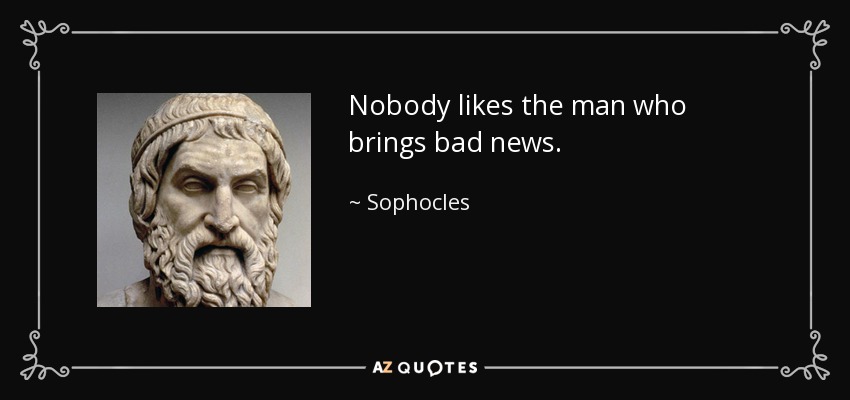
Start Kicking a Common Enemy in the Ribcage -- Up until now, the media have always been ideal in this role.  First of all, the citizenry don't know if the media are singular or plural, but nonetheless, out of control.  Nobody likes bad news, such as "the jamoke you just elected is a drooling idiot, being played by all the crazies out there."  Furthermore, the media being made up of discrete, not-usually-interdependent sacks of mediocrity, has an impossible time putting together a coherent defense on a news cycle basis.  Whereas politicians ordinarily have at least two years to work on their alibis.

FLOTUS Absorbs much of the Personal Attacks -- The "First Lady" no matter how charming or scurrilous takes the lion's share of most of the catty remarks.

Staged Fight with Lawyers -- Have a yelling match with a professional group that everyone hates.  Try to do something that you know the legal system will not allow, particularly if it was one of the most populist undeliverables out there.  It is especially good to lose to a segment of the court system that has pissed off your populismos, previously.  This can work out as a long term strategy as well.  Keep doing things against the law until you can invoke Robin Hood and Jesse James.  Also, try to make sure what you do will fail, but it is something that you have really sold, big-time, to your bases.  There was once an elective insurance commissioner in North Carolina who in all cases disapproved rate increases.  He knew he had no grounds to be upheld, but he became a martyr to the insurance purchasers of his state.

We Make Way Too Much of It -- I found it so refreshing that I spent a dozen days or more in places like Ireland, New Zealand, Spain, Panama, and Austria, while never knowing who was the Grand Eminent Archon for any of those places.  I still do not know.

We Argue about the Wrong Question -- There's a debate trick called moving the fulcrum.  A true argument balances between what is known and/or resolved, and what is yet to be known and/or resolved.  The Question is misposed as whether we should have a state, whether we should have a POTUS, does POTUS have appropriate powers, is the selection method for POTUS effective, but WHO will be POTUS in a one-and-done, no-review, witch-trial-process that has no room for correction.


Now, if I insult you and your favorite POTUS, please understand that I am not taking a side against you.  Also, quickly abandon any idea that I may soothe you confirmation bias.  Maybe Lysander Spooner hated the office of POTUS more than me, but you will have to prove it.  I revere Thomas Jefferson as a man of the Age of Reason, but even he made a poor POTUS -- there is that matter of the nonconsultation regarding the Louisiana Purchase.  I would have done exactly the same thing, but I cannot tell you from where the license came.