Wednesday, February 8, 2017

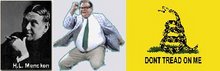
Doppelganger

Nobody asked but ...
To preserve our independence, we must not let our rulers load us with perpetual debt. We must make our election between economy and liberty, or profusion and servitude. . .I place economy among the first and most important of republican virtues, and public debt as the greatest of the dangers to be feared. 
– Thomas Jefferson 
Yet we bound ourselves, and continue to add more bindings, to a mechanism that is incapable of avoiding these perils and their consequences. 

As much of a Jefferson admirer as I am, I regret that he misunderstood the inevitability of the machine and his own naivete of trust in human reason as an antidote. 

But we must remember that Jefferson had little to do with the chains and bonds of the ruse that is called the Constitution of the United States.  His contribution was the soaring Declaration of Independence.  He was safely tucked away with the earthly delights of Paris, as President Washington's Minister to France, during the time that the Articles of Confederation were dying a predictable death -- the critical 5-year run-up to the Constitution's drafting and ratification.

It seems that Jefferson was still romantically attached to liberty; but his eyes and his dreams were on the arising French Revolution.  He must have assumed he had left the American experiment in good hands.  This is the nature of idea men -- they are great at founding dreams, but they are terrible at (if not entirely absent during) implementation.  They lack the patience for detail, they have scorn for micro managers.  We need only look at how Jefferson managed his personal life for vivid illustration.  He died deeply in debt, and unable to leave his dear Monticello to his family.

I'm not saying that Jefferson had his head in the clouds.  I'm saying he was a minarchist, at least, and an anarchist at heart, in my view.  The trouble of course was that Jefferson was patiently waiting for natural law to assert itself, while hotspur Alexander Hamilton was sucking all of the air out of the free-spirited new nation.

Hamilton was sharpening the politician's technique of the big lie -- tell the people what they want, then promise delivery of these things, then begin maneuvering to withhold exactly these same things, planning instead to give them to your cronies.

Hamilton was a master of distraction.  He established what the Constitution should do by tendering a draft that no one would like, which draft was almost casually laid aside by the deciders.  Then Hamilton even departed the conference without voting on the final version.  But his yes men whom he left behind at the conference knew precisely what to do.  


I have often said that the Bill of Rights was a direct distraction and even a kind of subliminal list of all of the rights of the people that were intended for subordination.  In its naked state, at drafting time, it looked like a list of things the government could not do.  It is entirely unlikely that someone who had a positive expectation for the Bill of Rights could foresee the contortions of rationalization that ill-intended bureaucrats could evoke to render the enumerated "rights" as a nest of statist vipers.

But I toiled in the ruined vineyards of statism for many years, where I could see the modus operandi. It was: build a cover of words, what words makes no difference, what context makes no difference.  Laws, legislation, regulations, interpretations are all clay in the hands of the seasoned bureaucrat.  Shape them as to meet the exigencies.  The oligarchy has every minute of every day to fashion schemes around what is naturally right.  The victims, who have their promised and inalienable rights alibied away, never see the lightening bolt that strikes them.

Words Poorly Used #75 -- Evolution

We make way too many assumptions about the nature of evolution, without questioning true, false, or irrelevant.  I will talk here about three:
-- humans are the focus of evolution.  Not!  In probability, as Verbal Vol wrote here, the water bear (http://serc.carleton.edu/microbelife/topics/tardigrade/index.html) can survive far beyond homo sapiens, but there is no clue as to what it will become, or even in which direction.  Evolution is a random process.  In a complex organism, such as man, there are random genetic and memetic changes that may result in one effect or another.  It is not a compliment to say a human is "evolved."
-- the same rules apply to human behaviors as to human organisms.  We've seen the work of evolution physically.  Examples are the duckbill platypus, and elephants -- truly odd contraptions.  And, as well, we've seen the work of evolution behaviorally.  The process that built the platypus, also built war, the Macarena, and Congress (and legislation).
-- this is the best of all possible worlds.
There are many more that may expand the list, or be in subsets or supersets of the matters on this list.

-- Kilgore Forelle

Tuesday, February 7, 2017

Magical Thinking

Nobody asked but ...

I couldnt refrain from sharing this brilliant poem from my Facebook friend, Troy Camplin.

Magical Thinking

I do believe I ought to bang my head
Against this wall again--I do believe
This time will work--I'll bring alive the dead
A final failing time--yet none will grieve
When this penultimate attempt will fail--
Just three or four times more and nature will
Give in, her laws will break, I will prevail--
And when I do I'll send nature the bill.

I'm certain that, unaided, I can fly--
I won't give in to nature's tyranny--
I know my good intentions will ensure
This leap success--I know I'll never die,
That I can overcome mere gravity--
I know this since I know my heart is pure.

-- Troy Camplin

   --- forwarded to you by Kilgore Forelle

Sunday, February 5, 2017

Cognitive Bias #1 -- Anchoring

Nobody asked but ...

Anchoring is a cognitive bias that we encounter in every negotiation, even with the snooze bar on our morning alarm clock.  A common example would be the case where an employee asks her boss for a raise.  The negotiation will then take place in the range between the current compensation and the ask or the offer, whichever comes first.  Politicians take advantage of this cognitive bias among their constituents.  They will pin a campaign promise, no matter how vague, to a limiting concrete -- I will build a wall (all answers to who, what, when, why, and how are blurry) on the border with Mexico (specific answer to where).  This incites those who want a wall at any cost.  This anchors the debate on the Mexican border, not on the why of the wall.  The argument never gets to whether we should have a wall.  The minority who made the wall their prime reason for voting for the successful candidate no longer have to justify the wall.

Kilgore Forelle

Tuesday, January 31, 2017

Old Ideas


Recently I encountered a compendium of smart (mostly) commentary entitled "This Idea Must Die: Theories That Are Blocking Progress, " https://www.edge.org/conversation/john_brockman-this-idea-must-die-scientific-theories-that-are-blocking-progress from Edge.org.  The book itself is a collection of answers from luminaries in many fields regarding the 2014 Edge Question, to wit,
Science advances by discovering new things and developing new ideas. Few truly new ideas are developed without abandoning old ones first. As theoretical physicist Max Planck (1858-1947) noted, "A new scientific truth does not triumph by convincing its opponents and making them see the light, but rather because its opponents eventually die, and a new generation grows up that is familiar with it." In other words, science advances by a series of funerals. Why wait that long?
WHAT SCIENTIFIC IDEA IS READY FOR RETIREMENT?
Ideas change, and the times we live in change. Perhaps the biggest change today is the rate of change. What established scientific idea is ready to be moved aside so that science can advance?
There are 175 essays in this compilation.  Some answers come from personal favorites such as Matt Ridley and Daniel Dennett, others from bête noirs such as Steven Pinker and Sam Harris.  But they are all incentive to thought.

The book actually addresses areas of science, but is to be appreciated for a rather broad view of science (I admit I have a limited appetite for quantum physics, but a howling hunger for philosophy and economics).

One of the paths that I am wandering now, from this inspiration, is to consider disposable ideas from the view of a voluntaryist.  There follow some ideas for which I would suggest early retirement.

  • Ideas are immortal -- although there are many ideas that have lived throughout Western Civilization, and which give no indication of disappearing anytime soon, we need to apply and re-apply a reasonable test for currency on all ideas.  Is the idea of prohibition worthwhile?  Do two and two make four?  How about alchemy and phlogiston?
  • Settled science -- the settling of things is not what science does.  Science asks ever new questions, and then explores feasibility.
  • The survival of the fittest -- Too many action-oriented people see this as kill or be killed.  In probability, we as individuals are not equipped to even guess what the definition of fit is, much less the meaning of survival.  In an older sense, often blamed on Charles Darwin, we see male animals contesting for the right to dominate both females and males in his following.  From this angle, a kind of Noah's Ark angle, the world would be a vast place with only various animations of King Arthur and Queen Guinevere.  But alas, the genetic algorithm is complex to a degree that forbids prediction.  Tardigrades are far more likely to produce the future of intelligence than is homo sapiens.
  • Random means what you think it means -- In statistics random means of or characterizing a process of selection in which each item of a set has an equal probability of being chosen.  Many folks use the word today to mean an unexpected intrusion into one's space.
  • Darwinism -- first, there is no belief system properly described as Darwinism.  Darwin's theories are not part of a belief system.  One can either demonstrate proper examples of Darwin's theory or one cannot.  Believing anything about them is fanciful.  
  • Anarchism -- there is also no belief system properly described as anarchism.  Anarchy is a noun that means, etymologically, "no leader,"  in effect no consensus boss.  Anarchy has rules, laws, structure, and hierarchy, among other things.
  • Ideas need institutions -- Over 50 years ago they had an idea that expressway traffic between Louisville and Southern Indiana could be a dream.  It has been a jungle of orange barrels every single day since.
  • Know means Know -- Socrates reportedly said that he was the wisest man in Athens because he knew nothing.  Plato followed that with the Allegory of the Cave, in which our opportunity to know anything was severely limited by constraints on human perceptivity.  Nowadays, however, everybody is the World's Foremost Authority.  The thing that Socrates recognized is that what we think we know is very different than what we actually know.  I know that I overslept this morning.  I can only guess where the ripples from that fact will flow.  We ought to discount the use, whenever we encounter it, of the phrase "I know," because in each case case north of 99% of all cases there is no "know," there is only hearsay, assumption, and indoctrination.
  • Time is a thing -- Time is a relative quality.  Events are things.  Being "on time" means only that you have previously agreed with one or more people to attend an event.  It is a measurement of voluntary self-control in a sea of timelessness.
  • Good, bad, ugly, beautiful. good, evil -- The idea that everything is binary, true or false, is itself a false binary idea.  One of the great advancements of society was democracy as founded by Pericles of Athens.  This converted previous multifarious indecision into binary decision making based on a measurement of a defined crowd, taken from its individuals.  It has been abused in every way imaginable on every day since.
  • Rights Be -- The idea of human rights originates in class warfare.  Some have said that might makes right when might only makes might.  In the old days, rights were used to figure out who lived on the "right" (as in correct) side of the tracks.  Many people today still insist on their rights.  They will imprison themselves in a fenced-off category, then declare that they have some "rights" thereby.  As an example, a person may claim to have a right to healthcare, when they may mean 1) that a well-intentioned society will bring the threatened violence of the state to bear on anyone who denies such healthcare (without actually defining healthcare -- who, what, when, where, why, how much, how many, how soon, how done), or 2) illness should never happen (without defining illness).  Nobody has a right to the suspension of natural occurrences, nor do they have a right to compel anyone to tend to them.
  • Call the police -- No problems get solved by calling the police.
  • Call the feds -- No problems get solved by calling the feds.
  • The policeman is your friend -- Get down on the ground!  At least three things are happening here.  The police forces themselves are more and more incompetent on average, which is to say that the police forces themselves are spread too thin, for far too many laws.  The local police, who used to be your friend, dependent on your goodwill, are now co-opted and dependent on the federal government.  Incompetency, excessive legislation, and co-optation by the Feds.
  • The government is here to ensure my druthers -- The state is not a Make-a-Wish organization.  People will actually say to me that the government's function is to protect them.  From what?  Unfortunately, too many think that means the right to live with only the people of whom they approve.  They want to call down the government's violence to make them happy.  I have never had a day in my life that the state, in one guise or another, did not steal more from me than any other combination of criminals.
  • Assertion is evidence -- No it's not.  Assertion is a speculation.  Evidence is evidence.
  • Anybody I disagree with is a snowflake -- Many snowflakes last longer than people who defy the laws of nature.  And certainly no ideology is any more snowflakey than any other.  Wanting to have your derrière kissed, enforced by the state, is socialism (snowflakery).
  • Reality shows are about reality -- Grow up.  Neither is professional wrestling faked.
  • The government's pomp and circumstance is free -- Like all of the inaugurations?  Who pays then?
  • You can give the government the power to do good without also giving it the power to do bad - in fact, to do anything it wants -- Give me an example.  (Hat tip to Harry Browne, who said you can't).
  • We are a beehive/anthill species -- This is an insult to bees and ants everywhere.  Goals, purpose, rationality, and individual distinction -- not necessarily goodness -- are the hallmarks of humans.
  • There is someone among us who can tell what a good collective goal would be -- Who?
  • Mark Twain was just a humorist -- Humor does not preclude profundity.  It's OK to believe that Mark Twain was just a joker, but that in no way detracts from his universal perspective.
  • Kurt Vonnegut was just a sci-fi writer -- A fictional setting does not cloak truth.  Science fiction is not a curtain over the cloak.  Aficionados of Robert Heinlein, Philip K. Dick, and Neil Stephenson know whereof I speak.
These are enough to think about today, but just remember, we will never run out of scared and lazy folks who believe they can have someone else to do their thinking for them.  And we will never run out of egotists who cannot resist telling others what to do.

I'll join you again with these and other ideas like them.  Stay tuned.

Monday, January 30, 2017

Words Poorly Used #74 -- Education


To read Dr. Gray's full article, click on the picture ^^

Above is the start of the article that I read recently. I made the following short observation on Facebook about compulsory behavior.
The experience of school teaches the same thing as prison does, that survival is dependent on maximum control of the hierarchy. The warden/principal must make sure that all aggression goes down the structure, not up. Neither bullies nor rapists are of any real concern, to the upper tiers, since the lower in the hierarchy a victim stands, the higher the penalties for upsetting the order.
This is an excerpt from Dr. Gray's premise:
Ask any schoolchild why they don't like school and they'll tell you. "School is prison." They may not use those words, because they're too polite, or maybe they've already been brainwashed to believe that school is for their own good and therefore it can't be prison. But decipher their words and the translation generally is, "School is prison."
-- Peter Gray
In fairness I should point out that he has engaged in the logic fallacy of presenting an open spectrum of infinite possibilities as only 3 distinct possibilities, all of which favor his premise. He effectively says that ALL children hate school, or they will gloss it over, or they are brainwashed.  But there are at least two more possibilities, the fallacy itself does not make the statement false, and champions of public school may also resort to converse logic fallacies.

I also read about a prison riot this month in the Amazonian jungle of Brazil.  As of the linked article, among 26 fatalities, all were inmates.   I don't  mean to overdramatize my remarks about schools with illustrations from prisons, but the structural mechanics are the same.  The dead people will never learn again, but school children covered in mental scars probably won't learn much either.

My family and I once lived in the district of the Columbine High School in Littleton, Colorado.  The school showed up on everybody's map when it became the scene of a massacre in 1999.  If we had not moved earlier back to Kentucky, our younger daughter would have been a student there.  That event alone should teach us to break up the assembly line approach to schooling.  This is an idea we do not seem capable of grasping.

Horton's Law

Nobody asked but ...

Today on the Tom Woods Show (probably not actually today's show, I listen via podcast), Tom cited Horton's Law.  If you haven't heard of it before, I bring it to you now as a public service:
(Scott) Horton's Law: Politicians can be counted on to keep all their bad promises, and abandon all their good ones.
No thanks needed.  Just listen to Tom Woods and Scott Horton and check out LibertarianInstitute.org.

Kilgore Forelle